
Health
Psychopathy Spectrum Test and What It Measures

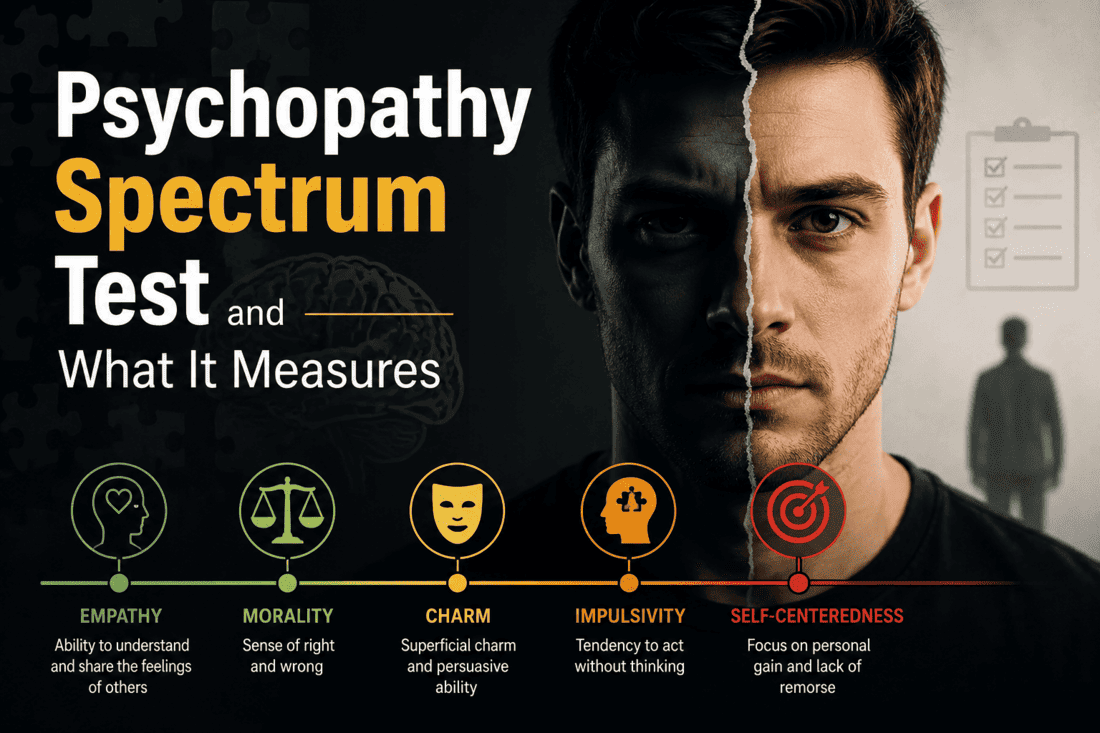
Human personality exists on a continuum. People vary considerably in their empathy, impulsiveness, emotional control, confidence, and risk-taking tendencies. For decades, psychologists have tried to understand how certain personality characteristics influence behavior, especially traits involving deception, lack of guilt, emotional detachment, and antisocial tendencies. This growing interest has led to increased public curiosity about psychopathy spectrum tests.
In general, a psychopathy spectrum test is designed to evaluate personality traits commonly associated with psychopathic behavior. Psychopathy is not simply the violence or criminal behavior often portrayed in movies and crime shows. Many individuals may display mild psychopathic traits without engaging in harmful or illegal actions. The concept exists on a continuum, which is why the term “spectrum” is becoming increasingly common in psychological discussions.
What Is A Psychopath?
Psychopathy is a psychological construct characterized by a combination of emotional, interpersonal, and behavioral traits. It is often associated with characteristics such as:
- Lack of empathy
- Superficial charm
- Manipulative behavior
- Lack of guilt or remorse
- Impulsiveness
- Sensation-seeking tendencies
- Emotional detachment
- Low fear response
However, not every person who possesses these characteristics is considered a clinical psychopath. In modern psychology, psychopathy is understood as a complex set of traits that can appear in varying degrees.
Some individuals may have high confidence and emotional resilience while still maintaining healthy relationships and moral behavior. Others may exhibit more harmful patterns involving chronic dishonesty, aggression, or exploitation.
Why the Idea of a “Spectrum” Matters
Traditionally, psychopathy was viewed as a fixed category: either someone was a psychopath or they were not. Modern psychological research suggests that personality traits rarely function in such absolute ways.
The spectrum approach recognizes that psychopathic traits can exist at different intensity levels. A person may display emotional coldness or risk-taking behavior without meeting the criteria for severe antisocial conduct.
For example:
- One person may simply have low emotional sensitivity and high competitiveness.
- Another may display a chronic pattern of manipulation and disregard for others.
- In more serious cases, there may be persistent criminal behavior and a complete lack of remorse.
The spectrum model gives researchers a more accurate understanding of the diversity of personality traits and behavioral outcomes.
What is Psychopathy Spectrum Assessment?
A psychopathy spectrum test is usually a questionnaire or psychological assessment designed to measure traits associated with psychopathy. These tests often focus on patterns in emotional processing, social interaction, impulse control, and interpersonal behavior.
The purpose is not usually clinical diagnosis. Many online tests are intended for educational or self-reflection purposes rather than formal mental health evaluation.
Questions may focus on areas such as:
- Emotional responsiveness
- Honesty and manipulation
- Response to stress or danger
- Concern for others’ wellbeing
- Need for stimulation
- Attitudes toward rules and authority
- Interpersonal relationships
The final score generally reflects how strongly a person exhibits certain psychopathy-related traits.
Characteristics Usually Measured by These Tests
Emotional Disconnection
Psychopathy tests often include questions related to emotional depth and sensitivity. Individuals with stronger psychopathic traits may struggle to form emotional attachments or feel empathy for others’ suffering.
However, this does not mean they lack emotions entirely. Emotional responses may instead be reduced, selective, or processed differently.
Manipulative Behavior
Another commonly measured trait is interpersonal manipulation. Some individuals use charm, persuasion, or deception strategically to influence others for personal benefit.
Psychopathy spectrum tests often evaluate whether someone tends to exploit relationships or prioritize personal interests over the wellbeing of others.
Impulsiveness
Impulsive behavior is frequently associated with psychopathic tendencies. This may involve acting without considering consequences, constantly seeking excitement, or displaying poor long-term planning.
However, impulsivity varies widely. Some individuals with psychopathic traits may appear highly controlled and calculating.
Fearlessness and Risk-Taking
Research has identified links between psychopathy and reduced fear responses. Some individuals may remain unusually calm in stressful or dangerous situations.
While this trait can contribute to reckless behavior, it may also appear in high-pressure professions where emotional control is beneficial.
Absence of Remorse
Reduced guilt after harmful actions is one of the most discussed psychopathic traits. Tests may assess whether someone accepts responsibility for mistakes or shows concern about causing harm to others.
Online Test Vs Clinical Test
It is important to distinguish between professional psychological assessments and online tests designed mainly for entertainment.
Clinical Assessment
Mental health professionals use structured tools developed through scientific psychological research. One of the best-known assessments is the Hare Psychopathy Checklist-Revised (PCL-R), created by psychologist Robert Hare.
The PCL-R is primarily used in clinical and forensic settings. It involves detailed interviews, behavioral analysis, and background evaluation rather than simple self-report questions.
Clinical assessments are conducted by trained professionals and are not intended for casual self-diagnosis.
Online Tests For Psychopathy
Online psychopathy spectrum tests are widely available and often gain popularity because of society’s fascination with psychopathic characters in popular culture.
These quizzes may provide some general insights into personality traits, but they also have significant limitations:
- Results may not be scientifically accurate
- Questions may oversimplify complex behaviors
- Self-reporting may distort outcomes
- Scores are not clinical diagnoses
People sometimes interpret these results too literally, which can lead to unnecessary concern or misunderstanding.
The Power of Popular Culture
Movies, television series, and crime documentaries have strongly influenced public perceptions of psychopathy. Fictional psychopaths are often portrayed as violent masterminds, serial killers, or emotionless criminals.
In reality, psychopathy is far more complex.
Some individuals with psychopathic traits function successfully in business, politics, law enforcement, or highly competitive industries. Researchers sometimes describe this as “successful psychopathy,” where traits such as confidence, emotional detachment, and fearlessness may contribute to professional success.
That does not mean harmful behavior should be ignored. Severe psychopathy can still be linked to aggression, exploitation, and antisocial conduct. However, the stereotype of the constantly violent psychopath does not represent the full psychological picture.
Can Psychopathic Traits Be Changed?
Psychological traits are influenced by genetics, environment, upbringing, social experiences, and brain development. Researchers continue to debate how stable psychopathic characteristics remain over time.
Some traits, especially during adolescence, may change significantly with emotional maturity. Therapy and behavioral interventions can help individuals improve impulse control, emotional awareness, and interpersonal functioning.
However, severe psychopathy tends to be more resistant to treatment than many other personality-related conditions.
Why People Take The Psychopathy Spectrum Tests
Interest in psychopathy testing is often driven by curiosity rather than clinical concern. People may want to:
- Learn more about personality psychology
- Compare traits with friends
- Explore emotional tendencies
- Understand behavioral patterns
- Examine leadership styles or risk-taking behavior
In some cases, individuals take these tests after reading discussions online about narcissism, sociopathy, or antisocial personality traits.
The growing popularity of personality assessments reflects a broader cultural interest in self-analysis and mental health awareness.
Final Thoughts
A psychopathy spectrum test is not a definitive measure of someone’s character or morality. Human behavior is influenced by countless psychological, social, and biological factors that cannot be fully measured through a simple questionnaire.
The concept of a spectrum offers a more realistic understanding of personality variation. Psychopathic traits can exist in mild, moderate, or severe forms, and not every high-scoring individual is dangerous to others.
These assessments should be understood with nuance, context, and caution. While online tests may offer interesting insights into personality tendencies, professional evaluation remains essential for any meaningful psychological interpretation.

The public has long been fascinated by the families of political leaders, and one name that frequently draws attention is Barron Trump. Among the many discussions surrounding him, his remarkable height has become one of the most talked-about topics online. Standing significantly taller than many people his age, Barron has sparked widespread curiosity, with some internet users speculating about whether his height could be linked to a medical condition such as Marfan syndrome.
Searches related to “Barron Trump height disease” and “Barron Trump Marfan syndrome” continue to trend across social media and forums. However, it is important to separate medical facts from public assumptions. Height alone cannot determine whether someone has a genetic disorder, and no verified medical information has ever confirmed that Barron Trump has Marfan syndrome.
Understanding Marfan Syndrome
Marfan syndrome is a hereditary disorder that affects the connective tissues in the body. Connective tissues play a crucial role in supporting bones, muscles, blood vessels, ligaments, and organs. When these tissues are affected, it can influence the body’s growth and overall physical structure.
People with Marfan syndrome are often noticeably tall and slim. They may have long arms, elongated fingers, flexible joints, and a lean body frame. Because these features are visually apparent, the condition is sometimes discussed whenever a person appears exceptionally tall.
Still, medical experts emphasize that physical appearance alone is never enough for diagnosis. Many naturally tall individuals have no underlying health condition whatsoever.
Why Height Is Often Associated With Marfan Syndrome
One of the defining characteristics of Marfan syndrome is excessive bone growth. The disorder can affect the growth of long bones in the arms and legs, causing individuals to grow taller than average. In some cases, family members may also notice that a person with Marfan syndrome appears much taller than relatives of similar age.
This connection between height and Marfan syndrome explains why public speculation sometimes emerges around celebrities or public figures with unusual stature. Since Barron Trump has grown significantly taller than both of his parents, conversations about his health occasionally appear online.
However, genetics alone can also explain height differences. Teenagers can experience rapid growth spurts, especially during adolescence, and height is influenced by numerous factors including nutrition, heredity, and hormonal development.
Common Symptoms Beyond Height
Doctors do not diagnose Marfan syndrome based solely on height. Instead, they look for a combination of symptoms that may affect different parts of the body. Some commonly associated signs include:
- Long arms, legs, hands, and fingers
- Curvature of the spine, also known as scoliosis
- Flexible or loose joints
- Flat feet
- Vision complications, including severe nearsightedness
- Heart and blood vessel abnormalities, particularly enlargement of the aorta
Among these symptoms, cardiovascular complications are considered the most serious. An enlarged aorta can increase the risk of life-threatening heart problems if left untreated. This is why early diagnosis and medical monitoring are extremely important for people living with Marfan syndrome.
How Doctors Diagnose the Condition
Diagnosing Marfan syndrome usually requires multiple medical evaluations rather than a single test. Healthcare professionals often review family history, perform physical examinations, and conduct imaging tests to examine the heart and blood vessels.
Genetic testing may also be recommended in certain situations. Since the condition is inherited, a parent with Marfan syndrome has a chance of passing it on to their child. However, spontaneous genetic mutations can also cause the condition in people without a family history.
Because symptoms vary widely from person to person, some individuals may live for years without realizing they have the disorder.
Public Speculation and the Importance of Privacy
In today’s digital world, public figures often become the subject of intense online discussion. When someone is constantly in the spotlight, even normal physical characteristics can lead to rumors and assumptions. Barron Trump’s height is a clear example of how quickly speculation can spread online without medical evidence.
Discussing health conditions responsibly is essential, especially when there is no official confirmation from the individual or their family. Medical privacy should always be respected, regardless of a person’s public status.
It is also important to avoid equating tall stature with illness. Millions of people around the world are naturally tall without having any genetic condition or medical complication.
Living a Healthy Life With Marfan Syndrome
For individuals who are diagnosed with Marfan syndrome, proper medical care can make a significant difference in long-term health outcomes. Regular heart monitoring, eye examinations, and orthopedic care are often recommended.
Doctors may also encourage lifestyle adjustments, including avoiding intense physical strain that could place pressure on the heart and blood vessels. With early treatment and consistent medical support, many people with Marfan syndrome are able to live active and fulfilling lives.
Advancements in modern medicine have greatly improved the quality of life and life expectancy for individuals managing the condition.
Final Thoughts
The ongoing public interest in Barron Trump’s height reflects broader curiosity about genetics, growth, and health conditions like Marfan syndrome. While the internet often connects extraordinary height with medical disorders, it is essential to rely on facts rather than assumptions.
Marfan syndrome is a complex genetic condition involving connective tissues and requires professional diagnosis through medical evaluation. Height may be one visible characteristic, but it is only one piece of a much larger medical picture.
Until any verified information is publicly shared, claims regarding Barron Trump’s health remain speculative. Respectful discussions grounded in medical understanding are always more valuable than unfounded rumors.

Progressive overload is the training technique that involves gradually increasing your workout intensity. This helps build muscle strength and size.
If you’ve been trying to move past a workout plateau for a long time without success, this blog is going to be a huge help.
Read to know how to do progressive overloading to get fitter and stronger.
How Does Progressive Overloading Help You
When you do the same kind of workout every day, your body adapts, and it starts to feel less challenging. As a result, your body starts plateauing, and you hit a dead end in progress.
One piece of good news about plateaus is that you only hit them after you’ve made significant progress. So, cheers for that. But what next?
That’s where progressing overloading comes to your rescue. It involves increasing the amount of weight you lift and the number of repetitions you do.
This strategy effectively builds muscle strength when paired with high-protein, nutritious recovery fuel like ISO whey protein shakes. The only bad news is that progressive overloading has a few limitations. Check the next section.
Limitations of Progressive Overloading
The downside of progressive overload is that you must increase the load gradually. It can be dangerous if you progress rapidly without letting your body adapt to the pressure.
Also, you may not notice the changes right away, but it will be gradual and consistent.
This is why it is recommended to consult a certified personal trainer so that you can customize your fitness routine to benefit “you” the most.
How to Do Progressive Overload?
There are multiple ways to upgrade your daily workout to hit new bodybuilding goals. Here are some examples:
- Increase Workout Resistance
Adding more stress to your workout pushes your muscles to break down, rebuild, and become stronger. You can start pulling heavy weights. A key point to remember is to progress to heavier weights only once you can comfortably perform 10-12 repetitions with lighter weights. Also, take 1-2 rest days between lifting to ensure proper recovery.
- Boost Endurance
This can be done by increasing the length of your workouts. For example, you can do more reps with lighter weights. This needs to be done once you can master the exercise with certain weights.
- Build More Tempo
Increasing the tempo means you increase your workout intensity. Do so by leveling up your exercise pace and minimizing the resting time. But again, no need to make yourself go out of breath in doing it. Upgrade only once you feel comfortable.
Important Safety Tips
Here are some safety tips that you must follow to do progressive overloading safely without inflicting any injuries on yourself:
- No matter how long you have been stuck on the plateau. Progress your difficulty level only after mastering the exercise technique. This means you should take at least 2 weeks to get used to a routine before advancing.
- Always consult a certified personal trainer before you introduce any rigorous changes to your routine. They might be able to offer personalized guidance for your body’s needs.
- Always take sufficient time to rest and recover from the increasing stress on your muscles. Support it with adequate sleep, nutritious protein-packed meals (like protein oats, eggs, yogurt, chicken, lentils), and target different muscle groups on different days.
Simple Exercises for Progressive Overloading Days
The types of progress you make depend on your fitness level and the type of workout that you do. However, here is a sample plan:
Increase Volume
- Week 1: 10 to 12 squats
- Week 3: 12 to 15 squats
- Week 5: 15 squats
You can do these squats with or without weights.
Increase Weights
- Week 1: Do bicep curls with 10 to 12-pound weights
- Week 4. Do bicep curls with 12 to 15-pound weights
- Week 8. Do bicep curls with 15 to 18-pound weights
Increase running mileage
- Week 1: Hit tracks for 20 minutes
- Week 3: Run for 30 minutes
- Week 5: Increase running time to 30 to 40 minutes
While running, you can keep your pace light to moderate.
To Sum Up
Progressive overloading is needed to help you get past workout plateaus and support muscle growth. This strategy involves increasing weights, repetitions, and workout intensity to gradually adapt your body and push it for growth. One important thing to keep in mind is to do it all gradually and consistently to expect realistic results, and consult a fitness trainer for further help.


Cadillac LYRIQ Driving Modes: Do They Specify a Range or Battery Usage?

Blooket.com: The Game-Based Learning Platform That Makes Classrooms More Engaging

Sarah Boe: Who Is Alfie Boe’s Former Wife?

Best Gaming Website Wheon com Games in 2025

How to Generate Passive Income with 5starsstocks.com